
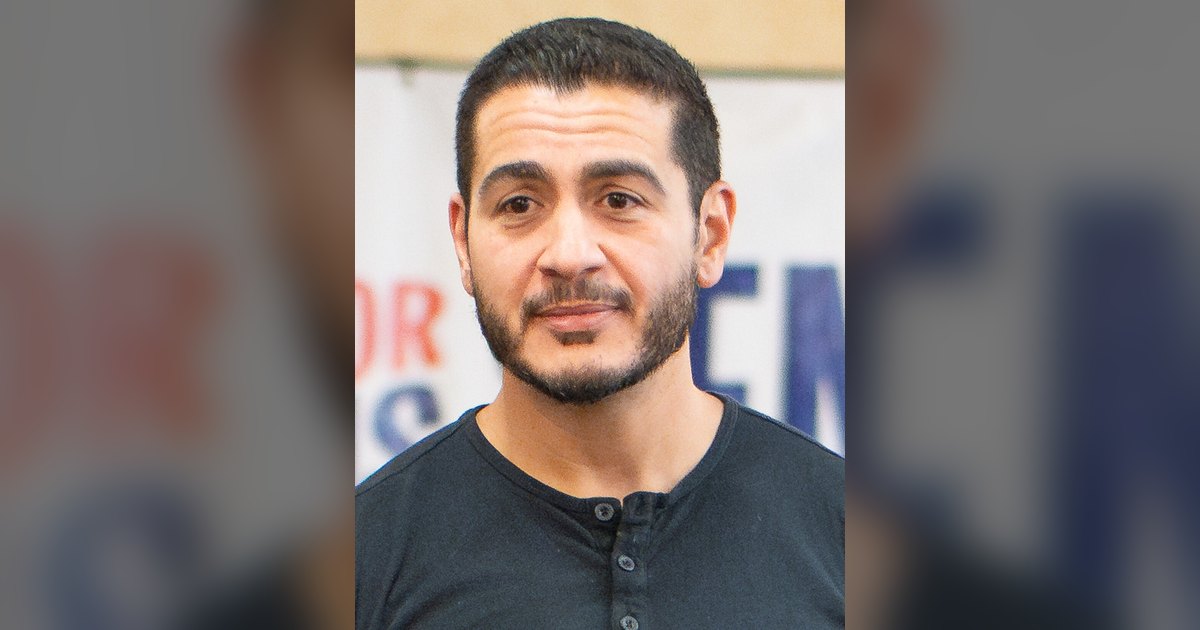
Abdul El-Sayed Won a Senate Primary. Then ‘Inshallah’ Was Turned Into a Weapon
Abdul El-Sayed had just won Michigan’s Democratic Senate primary when a coordinated online campaign clipped a single word from his victory speech — “inshallah,” Arabic for “God willing” — and recast it as menace. In the days after the Aug. 4, 2026, vote, researchers traced nearly 2,000 accounts amplifying posts that branded the Muslim nominee a “radical Islamist” and a “terrorist.”
On Aug. 4, 2026, Abdul El-Sayed, a physician and former Detroit health official, narrowly won Michigan’s Democratic primary for U.S. Senate, defeating Representative Haley Stevens, according to NBC News. He had overcome more than $60 million in outside spending, much of it from pro-Israel groups, and advances to a November contest against the Republican nominee, Mike Rogers, Al Jazeera reported.
Within hours, a second contest had begun online. Accounts began clipping one word from El-Sayed’s victory speech — “inshallah,” an Arabic expression meaning “God willing” that he used in saying he hoped his win would show that money alone does not decide U.S. elections — and recirculating it as evidence of a threat, according to an investigation by Al Jazeera.
A word turned into an accusation
The right-wing influencer Benny Johnson helped drive the trend, posting a clip that drew more than 193,000 views under the caption, “Muslim Socialist Candidate for Senate in Michigan Abdul El-Sayed says ‘inshallah’ during his speech on election night,” according to Al Jazeera. The far-right activist Laura Loomer called the clip “disgusting.” From there, the outlet reported, the rhetoric escalated into baseless claims that “Sharia is coming to America” and that Michigan was being “invaded.”
A network, mapped
The spread looked less like organic conversation than coordinated amplification. In the first 24 hours alone, Al Jazeera’s investigative unit mapped a network of 1,966 accounts and more than 2,500 connections pushing anti-El-Sayed content, and found that its reach relied heavily on reshares of the same posts rather than original discussion, according to Al Jazeera. Pro-Israel organizations and political figures then joined the wave, the outlet reported, carrying the framing from anonymous accounts into mainstream politics.
From influencers to senators
The language soon moved from online provocateurs to elected officials. Senator Tommy Tuberville of Alabama posted that “Abdulrahman Mohamed El-Sayed is a RADICAL ISLAMIST” and called him a “TERRORIST,” according to CNN. The Senate Leadership Fund, a Republican super PAC, warned that El-Sayed would “unleash terror,” and Senator Ted Cruz called El-Sayed and New York City Mayor Zohran Mamdani “Islamists,” CNN reported. President Donald Trump shared side-by-side images of himself and the first lady alongside El-Sayed and his wife, Sarah Jukaku, who wears a hijab, under the caption “Two very different America’s,” and called El-Sayed “a hater of Jews and hater of Israel” — an accusation CNN said he made without evidence.
Days later, Trump began describing Democrats more broadly as “jihadists,” according to CNN, and Representative Nancy Mace said Muslim officials were a “threat” to the United States, Al Jazeera reported. CNN characterized the Republican response as an “openly Islamophobic” campaign against the nominee.
El-Sayed’s response
El-Sayed rejected the attacks. Reacting to Republican advertisements that pointedly invoked his full name, he said, “Keep the name out your damn mouth,” according to CNN. He cast his win as a rebuke of big money in politics rather than the religious danger his critics described. His nomination, part of a run of progressive primary victories, made him one of the most prominent Muslim candidates on the 2026 Senate map, Al Jazeera reported.
The episode traced a now-familiar arc: a phrase stripped of its context, an anonymous swarm to carry it, and a short bridge from fringe accounts to officials with millions of followers. The pattern shows how quickly a routine expression of faith can be repackaged online as a mark of danger — and how a primary night can end not with a policy argument but with a candidate answering, again, for his religion.