
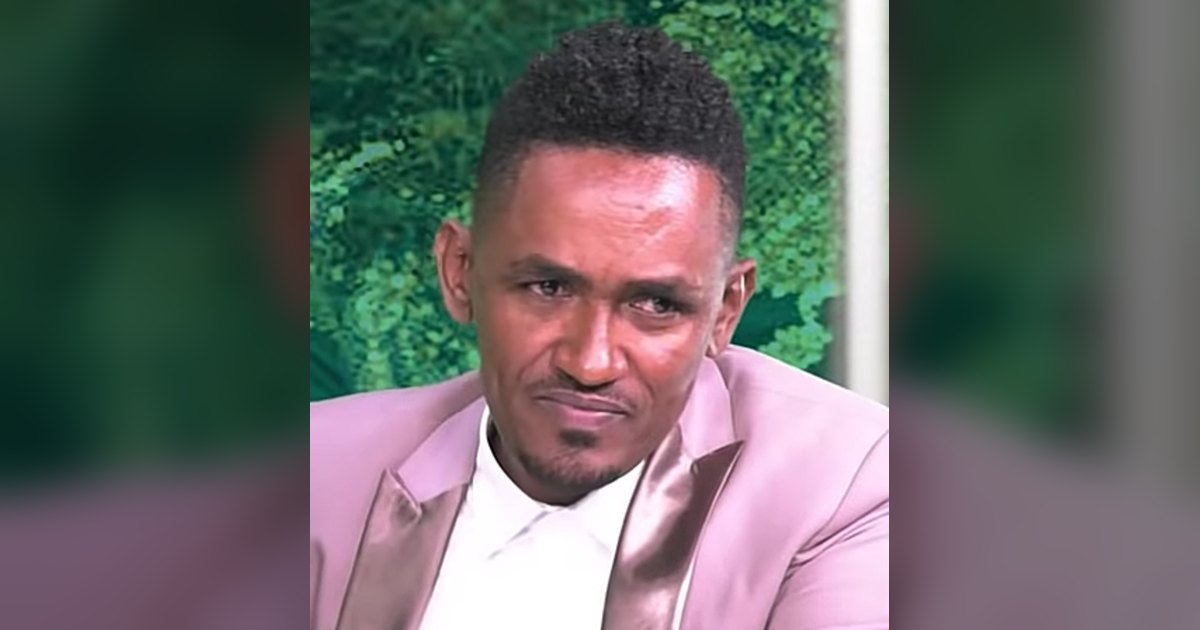
An Hour of Hate After a Singer Fell
Within an hour of the June 2020 assassination of Oromo musician Hachalu Hundessa, Ethiopian social media filled with hate speech, conspiracy theories and calls for ethnic killing. Rights advocates and researchers say a disinformation campaign on Facebook had demonized the singer for months before he died.
Hachalu Hundessa was shot dead late on June 29, 2020, in the Gelan Condominiums area of Addis Ababa, Ethiopia's capital, Al Jazeera reported. An ethnic Oromo musician and activist, he had risen to prominence with protest songs during the demonstrations that helped bring Prime Minister Abiy Ahmed to power in 2018. “When people were out on the street being shot at and being killed, he comforted the Oromo people with his songs of revolution, love and resistance,” Tsedale Lemma, editor-in-chief of the newspaper Addis Standard, told Al Jazeera.
The reaction online was immediate. Within an hour of the killing, Ethiopian users flooded Facebook, Twitter and YouTube with conspiracy theories, hate speech and disinformation, according to reporting by Global Voices. In an early Facebook post recorded in Al Jazeera's account of that night, the prominent activist Jawar Mohammed wrote: “They did not just kill Hachalu. They shot at the heart of the Oromo Nation, once again!!”
A campaign that began before the killing
The hostility did not start with the murder. In the months before his death, a “politically-motivated disinformation campaign orchestrated on Facebook through a network of newly created pages” had sought to demonize Hundessa, claiming he had abandoned his Oromo roots by siding with Abiy, Vice reported in September 2020. After he was killed, the outlet wrote, “this bloodshed was supercharged by the almost-instant and widespread sharing of hate speech and incitement to violence on Facebook.”
The Network Against Hate Speech, a volunteer group tracking such content in Ethiopia, catalogued posts calling for “genocidal attacks against an ethnic group or a religion — or both at the same time; and ordering people to burn civilians' properties, kill them brutally, and displace them,” according to Vice. Global Voices documented a July 1, 2020, broadcast on the Oromia Media Network in which a speaker at a town-hall meeting declared, “Amharas need to be exterminated in our neighbourhood.”
Days of deadly unrest
The violence that followed was among the deadliest Ethiopia had seen in years. Acting Oromia police commissioner Mustafa Kedir said on state television that 239 people had died — nine police officers, five militia members and 215 civilians — and that more than 3,500 suspects had been arrested, Al Jazeera reported. Officials attributed the deaths to a combination of lethal force by security officers and interethnic violence. Vice reported that minorities including Christian Amharas, Christian Oromos and Gurage people suffered the heaviest losses.
Prime Minister Abiy Ahmed called the killing “an evil act” and described the ensuing unrest as coordinated attempts to destabilize the country, according to Al Jazeera. Internet access was cut across most of Ethiopia from just after 9 a.m. local time on June 30, and the country remained largely offline until July 23 — a nationwide blackout that lasted 23 days, according to the internet-monitoring group NetBlocks.
A platform under scrutiny
Researchers and rights advocates drew comparisons to earlier crises. “Facebook's inaction helps propagate hate and polarization in a country and has a devastating impact on the narrative and extent of the violence,” Berhan Taye of the digital-rights group Access Now told Vice. Teddy Workneh, a scholar at Kent State University, said, “There is no doubt about the circumstantial evidence of the rise of hate speech and incitement on Facebook,” the outlet reported.
The gaps in oversight were later quantified. Writing for the Council on Foreign Relations in April 2022, Caroline Allen noted that Ethiopia's roughly seven million Facebook users were served by five content moderators working through two partner organizations, and that the company's community standards were translated into Amharic and Oromo only after the 2020 riots, the CFR blog reported. Meta, Facebook's parent company, has said it invests in safety and moderation and removes content that incites violence.
The Hundessa case has since become a reference point for researchers examining how online incitement can outrun the institutions meant to check it, and how quickly a single killing can be turned into a call for many more.