
Iran Built an App to Flag Uncovered Hair
A United Nations fact-finding mission documented an Iranian mobile app that lets police and vetted citizens report women seen without a hijab in a vehicle, automatically flagging the car for penalties. It arrived alongside a hardened dress-code law drafted after the protests over Mahsa Amini's death.
In a report delivered to the UN Human Rights Council on 14 March 2025, the Independent International Fact-Finding Mission on the Islamic Republic of Iran described how the Iranian authorities have folded surveillance technology into the enforcement of mandatory veiling. Among the tools it documented was a mobile application called Nazer, which allows the police and vetted members of the public to report women seen without a hijab inside vehicles.
Users of the app can submit the location, date, time and license-plate number of a vehicle in which an alleged infraction occurred, which then flags the car online and alerts the police, CBS News reported, citing the mission's findings. The system sends a real-time text message to the registered owner warning that the vehicle has been found in violation and could be impounded. According to the report, the app — accessible through the website of Iran's police, known as FARAJA — was expanded in September 2024 to cover women in ambulances, taxis, buses and metro cars.
State-sponsored vigilantism
The mission framed the app as part of a wider shift toward outsourcing enforcement to ordinary people. Iran “is increasingly reliant on state-sponsored vigilantism in an apparent effort to enlist businesses and private individuals in hijab compliance, portraying it as a civic responsibility,” the report found, according to CBS News. One of the mission's experts, Shaheen Sardar Ali, described Nazer as “a particular app that the Government has instituted, where after vetting, sort of normal citizens can also complain – file a complaint – against someone who's just passed by and hasn't got the mandatory hijab,” UN News reported.
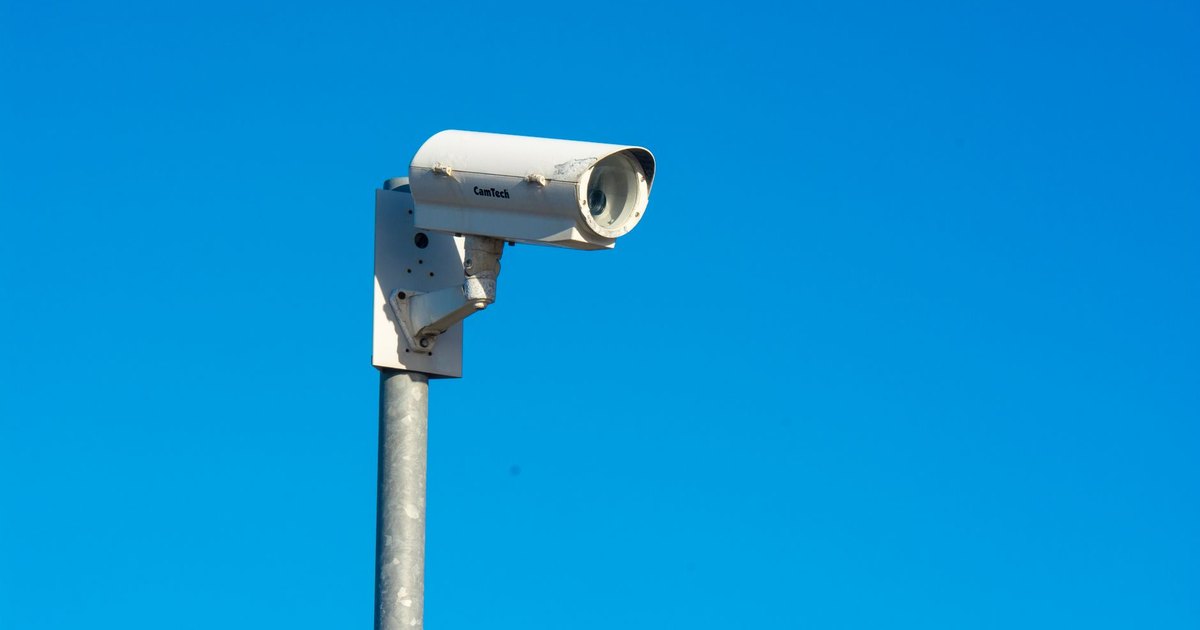
The report placed the app within a broader surveillance apparatus that includes cameras on major roadways, aerial drones monitoring public spaces, and facial-recognition software installed at the entrance of Amirkabir University in Tehran to identify women students without a hijab, UN News reported. The mission said 8,000 vehicles had been confiscated because their drivers were not adhering to the veiling rules, according to CBS News.
A hardened law
The surveillance push accompanied a stricter dress-code law. Human Rights Watch reported that Iran's parliament approved the “Protection of the Family through Promoting the Culture of Hijab and Chastity” law, which introduced heavier fines, prison terms of up to several years and other penalties for women who appear unveiled, and directed law enforcement to use traffic cameras and artificial intelligence to identify offenders. The measure was a response to the “Woman, Life, Freedom” protests that followed the 2022 death in custody of Mahsa Amini, a 22-year-old woman detained over her hijab; the group said Iran was trying “to silence women” rather than pursue reform, according to Human Rights Watch.
Amnesty International said the law would “intensify” the oppression of women and girls, warning in December 2024 that it criminalized unveiling with punishments that could reach years in prison. Its rollout was later paused amid internal criticism, but the enforcement infrastructure documented by the UN mission remained in place.
Enforcement by phone
The mission chair, Sara Hossain, said Iranian authorities had committed “gross human rights violations, some of which the Mission found to have amounted to crimes against humanity” in repressing the 2022 protests, UN News reported. The two-year investigation drew on tens of thousands of pieces of evidence and interviews with victims and witnesses.
Researchers who study digital repression note that citizen-reporting apps lower the cost of enforcement by distributing it across a population, turning ordinary phones into instruments of state control. The Nazer app, human-rights bodies say, is a documented example of how a piece of consumer software can be repurposed to police what women wear.