
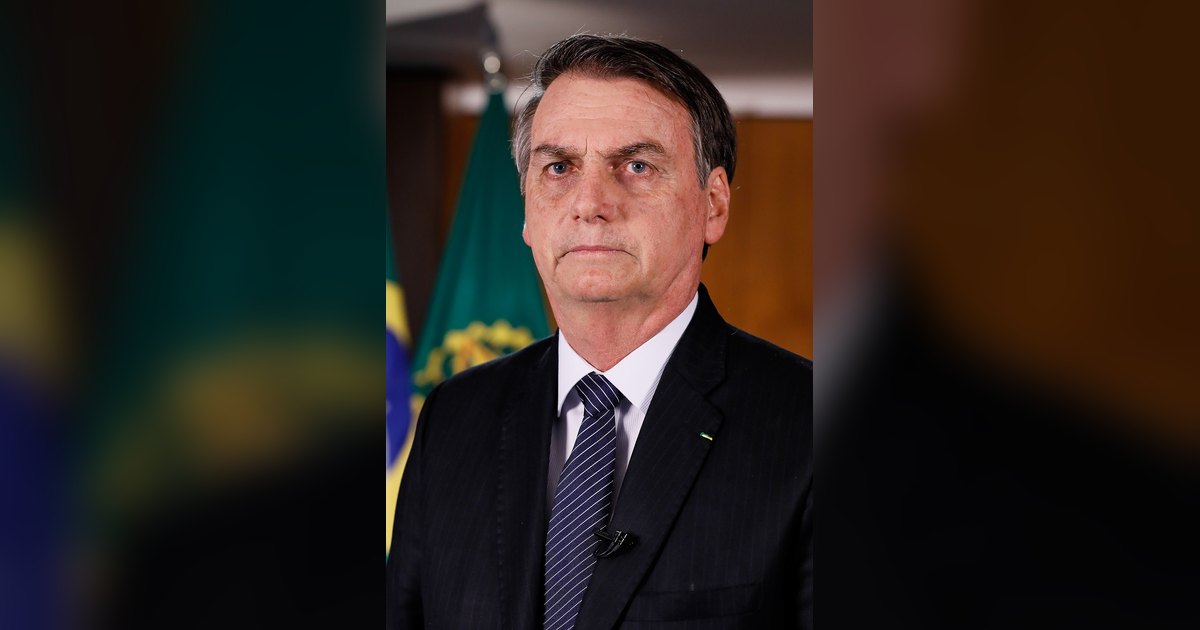
A Court Silenced Bolsonaro. An AI Avatar Spoke for Him Anyway.
Barred from addressing voters while under house arrest, Brazil's Jair Bolsonaro appeared at his son's July 25 campaign launch as an AI-generated avatar — a synthetic version of a man a court had ordered to stay silent. Days later, the country's top electoral court was weighing whether the video crossed the line its own rules draw around artificial intelligence in elections.
When the crowd at a presidential campaign launch in Brazil looked up at the screen on July 25, the man addressing them had been ordered by a court to keep quiet. Jair Bolsonaro, the country's former president, is under house arrest and barred from communicating publicly with voters. Yet a version of him — his face and his voice, generated by artificial intelligence — spoke to the convention of the Liberal Party and endorsed his son, Senator Flávio Bolsonaro, to carry his movement into October's election, Al Jazeera reported.
The stunt has become an early test of a question democracies are only beginning to confront: what happens when a politician who is legally silenced can still be conjured, convincingly, out of software.
The candidate who cannot speak
Bolsonaro was convicted over a plot to overturn his 2022 election defeat to President Luiz Inácio Lula da Silva, and is barred from public office. He is confined to house arrest and prohibited from communicating publicly, Agence France-Presse reported. That restriction is the reason the avatar exists: it offered his son's campaign a way to place the elder Bolsonaro before supporters without the former president saying a word himself.
Flávio Bolsonaro, a senator, is running to inherit his father's base against Lula in the October vote. At the launch, the physical hall was thin on prominent Brazilian politicians; the endorsements that carried came from abroad and on video, and from the AI figure of a father who could not lawfully appear, according to Al Jazeera.
‘What you see here is not me’
The video did not pretend to be real footage. It opened with the synthetic Bolsonaro telling the audience, “What you see here is not me,” and identifying itself as a simulation of his image and voice made with artificial intelligence. The avatar then declared that no prison would silence the movement he had built and asked supporters to embrace the son he had chosen as his successor, AFP reported.
That disclosure is now central to the fight over the clip. To the campaign, the on-screen label is what keeps the video on the right side of the law. To its critics, a message that reproduces a barred leader's likeness to move voters is exactly the harm the rules were written to stop, whether or not it is stamped as synthetic.
A test for Brazil's deepfake rules
Within days, a coalition of left-wing and center-left parties asked Brazil's Superior Electoral Court to investigate, arguing that electoral rules bar synthetic content capable of reproducing a real person to influence voters, AFP reported. Brazil's court has moved further than most on synthetic media, requiring that AI-generated campaign content be clearly labeled and prohibiting deepfakes used to help or harm a candidacy.
Flávio Bolsonaro's legal team told the court the clip broke no rules because it disclosed its AI origin and mixed no fabricated images with real ones, and so could not be classed as a deepfake, AFP reported. A lawyer for Jair Bolsonaro said the former president had not authorized the use of his image and voice for the video, and the court had not ruled on it, AFP reported.
Synthetic surrogates and the ballot
Much of the public debate about AI in elections has centered on deception — fabricated clips designed to make voters believe something false. The Bolsonaro video points to a second problem that labeling does not solve: a synthetic stand-in that lets a person the law has sidelined keep campaigning by proxy. The case is testing whether the technology can serve as a political surrogate for a leader barred from speaking to voters directly, AFP reported.
Brazil goes to the polls in October, and whether a virtual Bolsonaro reappears on the trail may depend on how the electoral court reads its own rules. The answer will be watched beyond Brazil, in every democracy now writing law for a campaign season in which a candidate's most persuasive appearance may be one no camera ever recorded.