
A Quake, a Cloud and a HAARP Hoax
When two earthquakes killed tens of thousands across Turkey and Syria in February 2023, false claims spread across social media almost as fast as the news itself. Conspiracy theories, doctored context and recycled disaster footage circulated widely, drawing warnings from fact-checkers and a brief government restriction on Twitter.
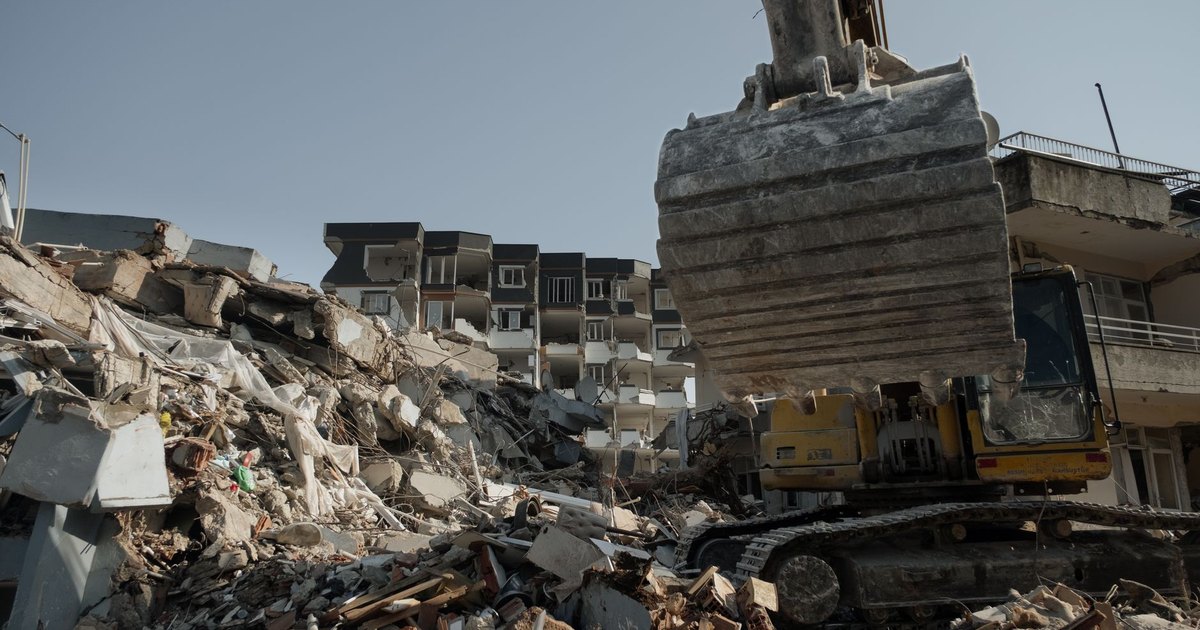
Two powerful earthquakes struck southern Turkey and northern Syria in the early hours of Feb. 6, 2023, killing more than 40,000 people, according to a mid-February tally cited by PolitiFact. The eventual toll would climb far higher. As rescuers dug through collapsed buildings in freezing weather, a second crisis unfolded on people's phones: a surge of misinformation that fact-checkers across the region scrambled to contain.
An old conspiracy, a natural cloud
Among the most widely shared falsehoods was the claim that the disaster had been engineered. Some users revived a long-running conspiracy theory blaming the High-frequency Active Auroral Research Program, or HAARP, a radio-science facility in Gakona, Alaska. The site sits on land owned by the U.S. Air Force but has been solely managed and operated by the University of Alaska Fairbanks since 2015. One Facebook post reviewed by fact-checkers claimed the earthquake was a “scripted” use of “geo engineering weather modification HAARP,” according to PolitiFact.
Much of the supposed proof was a photograph of a strange, saucer-shaped cloud over Turkey, presented as a sign of an atmospheric “attack.” The cloud was real, but the framing was not: it was a lenticular cloud, a natural meteorological formation that had appeared over Bursa, PolitiFact reported, citing The Washington Post. Jessica Matthews, the HAARP program manager, told PolitiFact that “the research equipment at the HAARP site cannot create or amplify natural disasters.” Harold Tobin, a seismic expert at the University of Washington, said that “energy in the ionosphere cannot cause earthquakes nor affect faults.”
Old footage, fresh panic
Alongside the conspiracy theories, recycled footage was passed off as scenes from the disaster. A video circulating on Facebook claimed to show a nuclear plant in Turkey exploding as a result of the earthquake. In fact, as the fact-checking organization Full Fact found, the clip showed the August 2020 explosion at the port of Beirut, footage that had been broadcast by Sky News more than two years earlier. Turkey's nuclear plants were still under construction and none were operational, Full Fact noted.
Other false posts stoked fear of imminent second disasters. Fact-checkers reported a wave of baseless warnings of further earthquakes, floods and tsunamis. Ahmad Primo, founder of the Syrian fact-checking outlet Verify-Sy, told the Poynter Institute that his team focused on “verifying information that spread panic among people, such as false expectations of other earthquakes.” Simge Akkas of the Turkish fact-checking outlet Doguluk Payi said in the same report that in such a catastrophe, “people need to know that the situation is probably worse than it seems now.” Can Semercioglu of the Turkish fact-checking group Teyit warned that “some malicious organizations may try to gain financial benefits by using people's emotions in times of crisis.”
A throttled platform, detained users
As anger grew over the pace of the government's response, Turkey briefly restricted access to Twitter. The internet-monitoring group NetBlocks reported on Feb. 8 that filtering had been applied on major internet providers “as the public come to rely on the service in the aftermath of a series of deadly earthquakes.” Critics said the restriction cut survivors and aid workers off from a vital channel for coordinating rescues. Access was restored the following morning after Turkish authorities met the platform's policy team over content moderation, NetBlocks reported.
Authorities also pursued individual users. By mid-February, Turkish police had arrested 20 people and detained 78 others accused of sharing “provocative” posts about the earthquakes, with hundreds more accounts identified, The National reported, citing figures compiled by Bloomberg. Rights groups warned that such crackdowns can also silence legitimate criticism of a disaster response.
The episode has become a case study in how a real catastrophe spawns a parallel information crisis, a pattern that fact-checkers say now follows nearly every major earthquake.