
The Southport Lie That Lit England's Riots
After three children were murdered at a dance class in Southport in July 2024, false claims online that the attacker was a Muslim asylum seeker spread within hours. Days of rioting followed across England, and British courts later jailed people for what they had posted.
On 29 July 2024, a 17-year-old entered a Taylor Swift-themed dance workshop in Southport, in north-west England, and attacked the children inside. Three girls were killed — Elsie Dot Stancombe, 7, Bebe King, 6, and Alice Da Silva Aguiar, 9 — and ten other people were wounded, according to the Crown Prosecution Service. The attacker, Axel Rudakubana, was later sentenced to life imprisonment with a minimum term of 52 years.
Rudakubana was born in Cardiff, Wales, and had no known links to Islam. The murders were not prosecuted as terrorism — Merseyside Police said the attack was not being treated as terror-related — though the CPS said Rudakubana separately faced charges of possessing the toxin ricin and a document useful for terrorism, an Al-Qaeda training manual, found at his home. But in the hours after the stabbings, before police had released any information about the suspect, a different story took hold online.
A name that was never real
A false name, “Ali Al-Shakati,” began circulating on social media, alongside claims that the attacker was a Muslim asylum seeker who had recently arrived in Britain on a small boat. The fact-checking organisation Full Fact found that an X account calling itself Channel3 Now, which had fewer than 3,300 followers at the time, was among the first to share the false name.
None of it was true. Merseyside Police issued a statement saying a name shared on social media in connection with the suspect was “incorrect” and urged people not to speculate, Full Fact reported. By then the claim had travelled far: posts sharing the false identity of the suspect were viewed at least 420,000 times, according to analysis The Independent reported, based on social media data analysed by Hootsuite, which found the false information appeared in at least 4,776 posts across X, Facebook, YouTube, Quora and Reddit.
From a screen to the streets
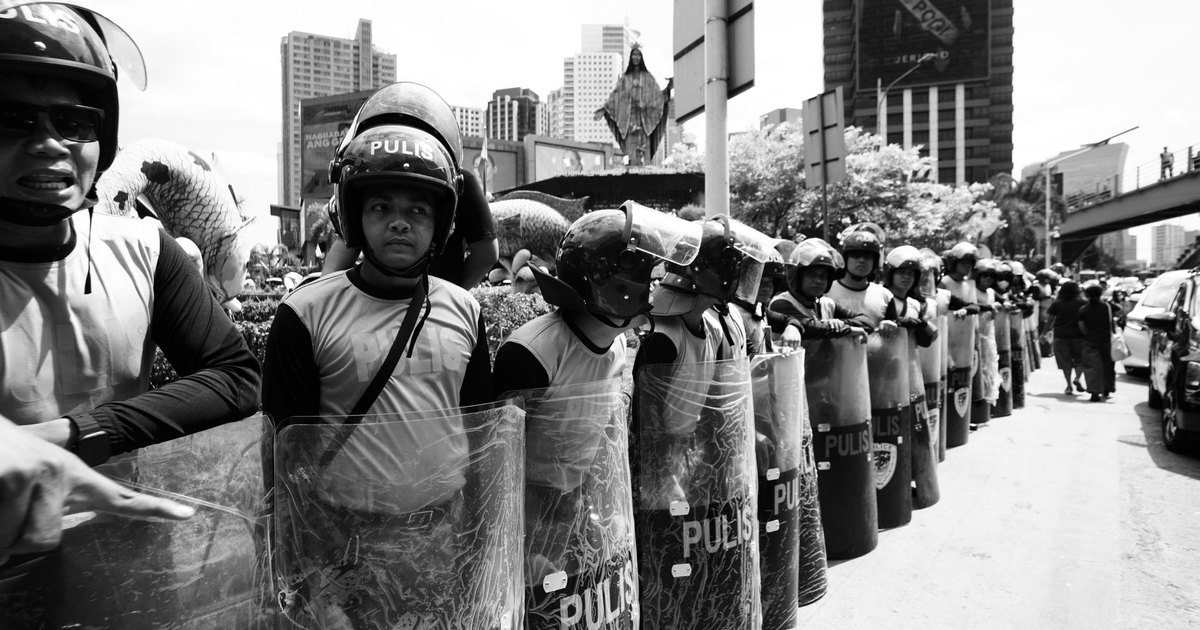
The day after the attack, a crowd gathered in Southport, clashed with police and damaged a local mosque. Unrest then spread to towns and cities across England and into Northern Ireland over the following week, with asylum hotels and immigration targets among the sites attacked. As of July 2025, arrests and charges connected to the disorder stood at 1,840 and 1,103 respectively, according to figures compiled in the public record of the events.
Prosecutors and courts treated some of the online conduct that accompanied the violence as a criminal act in its own right, not merely as background noise to it.
Jailed for a post
Among those prosecuted was Lucy Connolly, 41, a childminder from Northampton. Hours after the killings, she posted on X calling for “mass deportation now, set fire to all the f****** hotels full of the b*******,” adding, “If that makes me racist, so be it,” ITV News reported. She pleaded guilty to inciting racial hatred and was sentenced at Birmingham Crown Court to two years and seven months in prison.
“Using threatening, abusive or insulting language to rile up racism online is unacceptable and is breaking the law,” said Frank Ferguson, head of the CPS Special Crime and Counter Terrorism Division, in a statement on the case. In a related prosecution, the CPS said Tyler Kay, 26, was sentenced to 38 months for publishing material intended to stir up racial hatred.
An old pattern, at new speed
The Southport case has become a frequently cited example of how a false claim about an attacker's identity can move faster than any official correction and help translate online anger into offline violence. Researchers who study platform design note that feeds ranked by engagement tend to reward material that provokes the strongest reactions, and that hostility toward an identifiable group is among the most reliably engaging content. Corrections, by contrast, rarely reach the same audience with the same force.
What set the British response apart was the willingness of prosecutors to pursue individual posts as incitement, producing custodial sentences for words typed on a phone. The approach has been contested by free-speech advocates, but it has left an unusually detailed public record of how a single false name helped set a summer of unrest in motion.